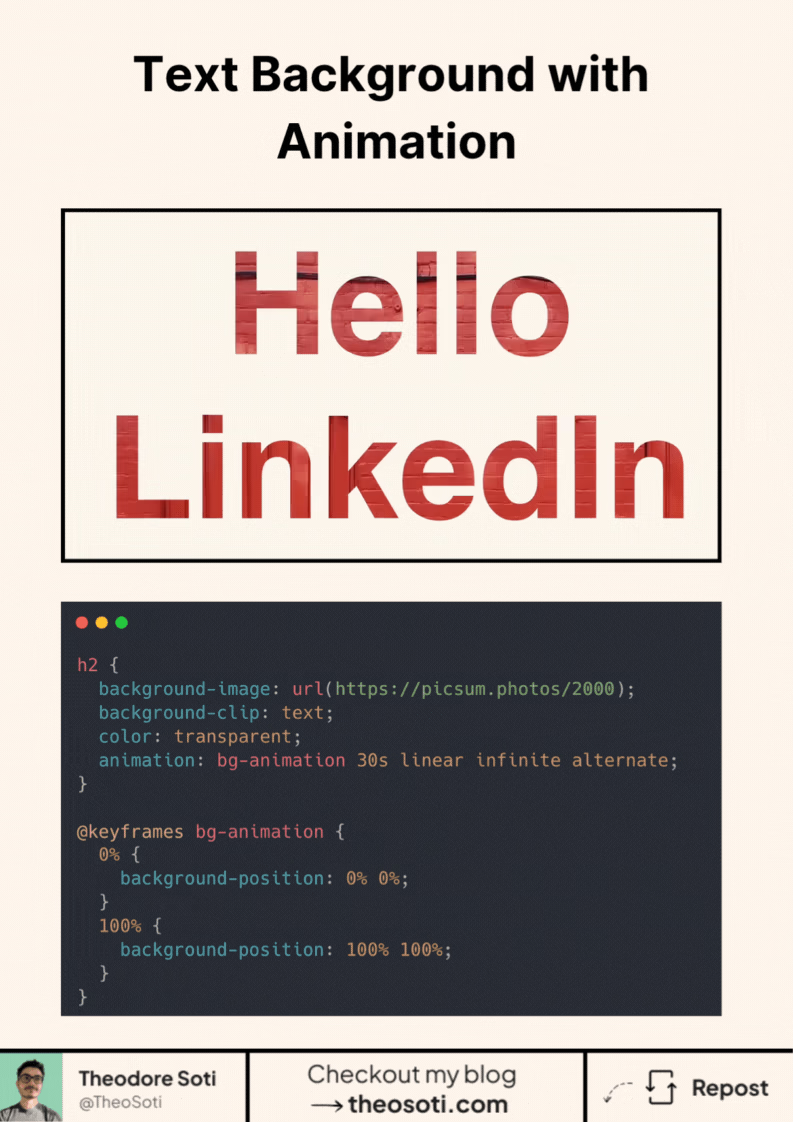
Text with a moving background?
No JavaScript needed.
This effect is pure CSS, and it’s clean, fast, and surprisingly easy to pull off.
We use:
- background-image 👉 display the image
- background-clip: text 👉 attach the image to the text
- color: transparent 👉 make the text invisible (to see the image behind it)
- A simple
@keyframesanimation
That’s it.
Just a few lines of code and your typography comes alive.
- No libraries.
- No DOM hacks.
- No bloat.
Perfect for hero sections, portfolios, landing pages, or even just showing off what CSS can do.
It’s part of a growing mindset:
Use less JS. Push CSS further.
There’s a lot you can build without JavaScript, and it’s more fun than you think.
Moving background text effects should prioritize readability over spectacle. Keep motion slow enough to avoid visual fatigue, and ensure the non-animated state still communicates the message clearly.
Moving text backgrounds should never compromise legibility. Keep motion slow and contrast strong, and ensure a clear static state when animation is reduced.
Use this as a readability tool, not only a visual effect. The best result is when style improves scanning speed without adding cognitive load.
A practical way to adopt @keyframes is to scope it to one high-impact component first. After validation, expand gradually to matching components and avoid ad-hoc one-off overrides.
Before final rollout, validate @keyframes against real content and real interaction states, not only demo text.
Always verify readability when animation is paused, because the static state is what many users will spend most time seeing.
If you liked this tip, you might enjoy the book, which is packed with similar insights to help you build better websites without relying on JavaScript.
Go check it out https://theosoti.com/you-dont-need-js/ and enjoy 20% OFF for a limited time!